A field guide for Park Hill homeowners after a house fire
Fire damage in a Park Hill house: what to save, what to test, what to rebuild
Park Hill houses were built with dense plaster, old-growth trim and oak floors. A lot of that can come through smoke if the crew tests, cleans and seals before anyone starts tearing out.
Draft guide. No restoration company is connected to this site yet, so it gives general information and takes no calls or requests.
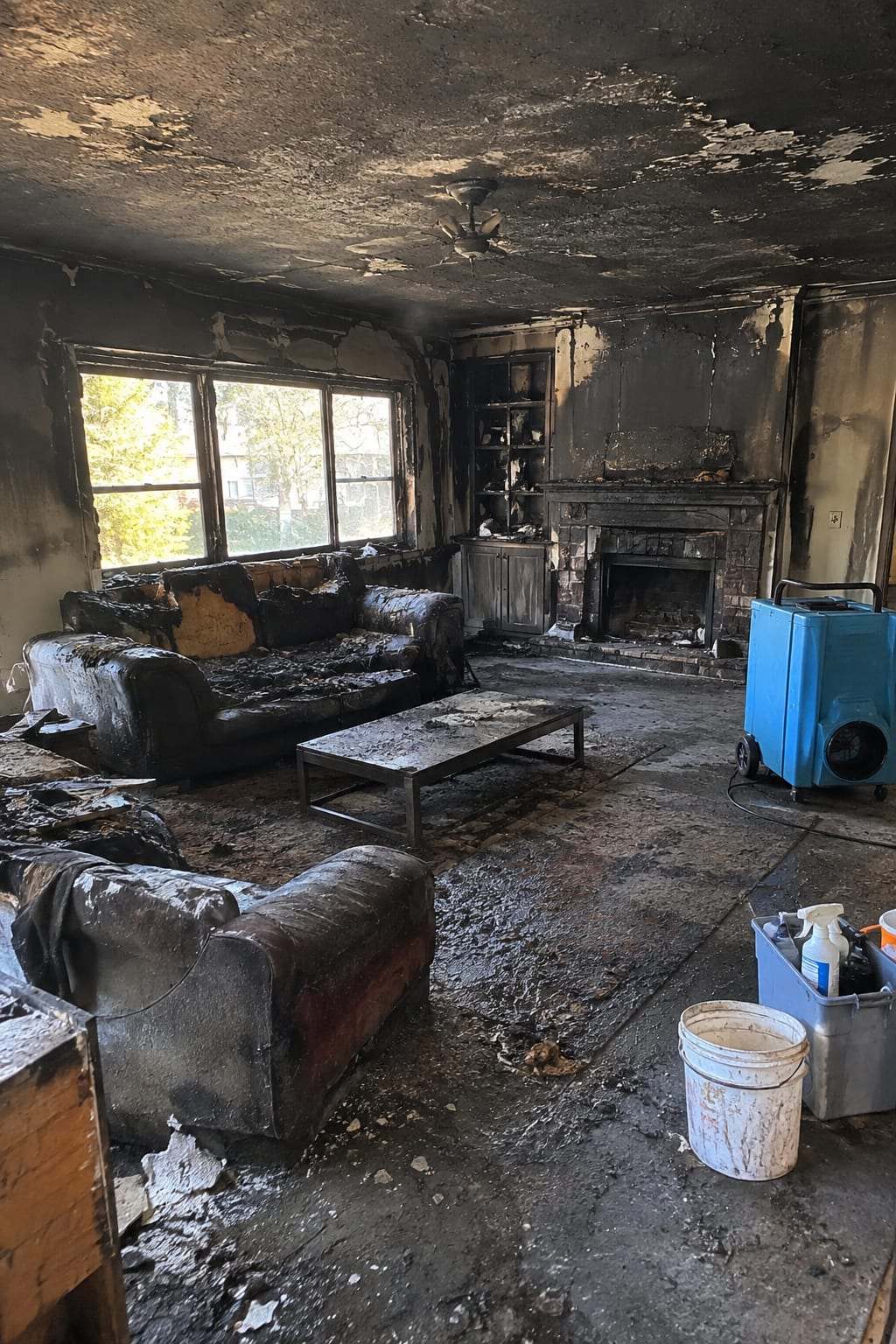
Brick walls often outlast the fire. The plaster, framing and wiring behind them are where the survey starts. Photo for illustration. It is not a documented Park Hill job.
The first few days
Shock makes the first days blur together. These are the moves that protect the house and the claim, in the order they usually happen.
Do
- Stay out until the fire department releases the house. Then have a licensed electrician check the wiring before the power is restored.
- Call your insurer. Ask about temporary housing and how the claim will run.
- List what was damaged, room by room, and keep every receipt for emergency spending.
Hold off
- Don't start tearing anything out yourself. Some older materials have to be tested first.
- Don't run the furnace or air conditioning until someone has checked the system for soot.
- Don't let anyone restore power before a licensed electrician has looked at the wiring.
Clean what can be cleaned.
Replace only what the fire took.
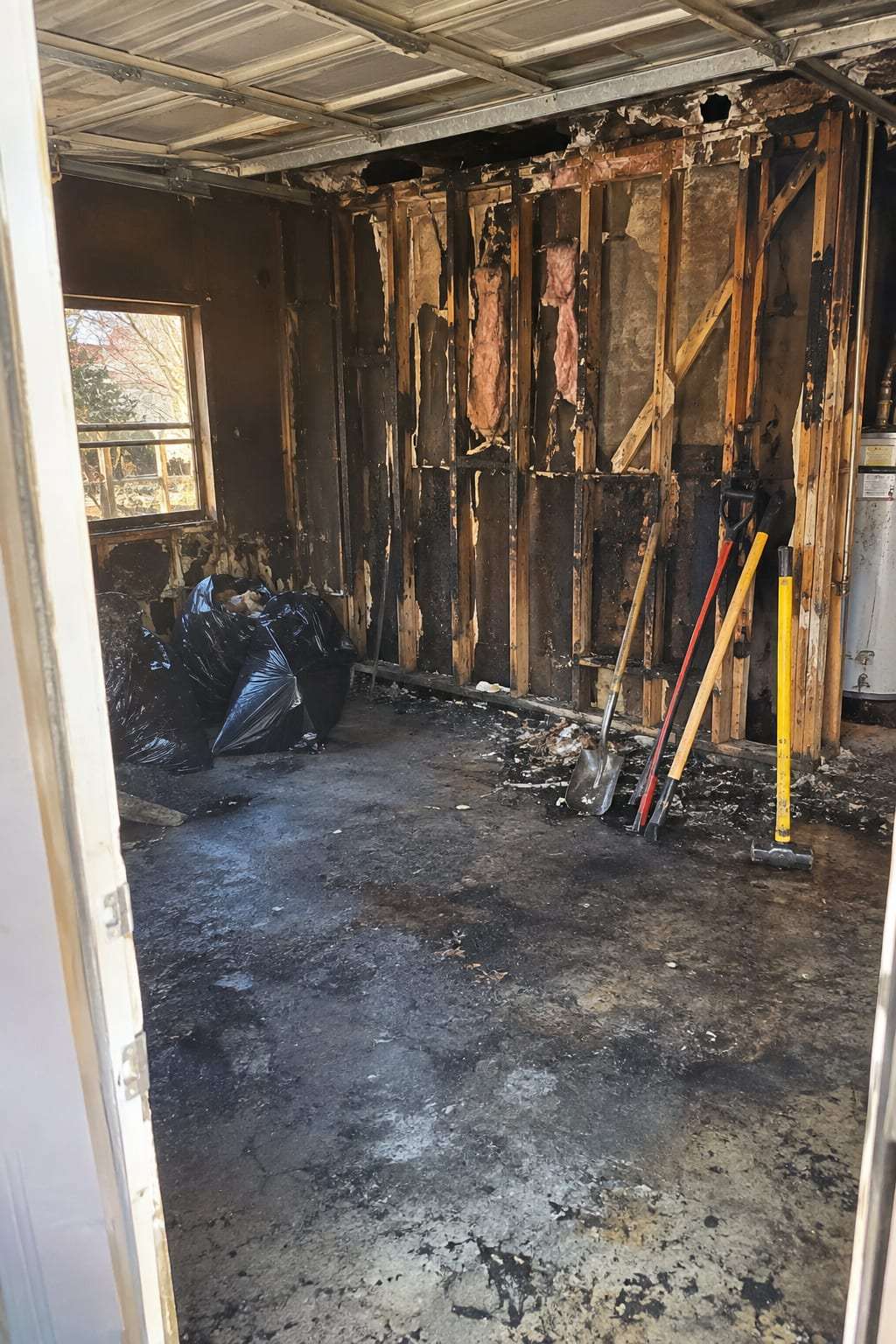
A house built in 1925 burns, smokes and dries out differently from one built in 2005
Smoke moves differently in a house built before the 1940s. Balloon-framed walls can run open from the basement sill to the attic, so soot can ride up inside them and settle two floors above the fire. Plaster on lath usually holds less residue than drywall. Old-growth fir trim and oak floors cost far more to replace than to clean.
Good restoration starts with a survey of every surface: what kind of soot sits on it, how deep it goes, and whether hose water soaked in behind it. The crew cleans what can be cleaned, tests before anything is demolished, and replaces only what the fire took. Each step gets photographed for the insurance claim.
Five ways an older house complicates fire cleanup
- Hidden pathsSmoke rides up open wall cavities and attic spaces built before fire blocking was required.
- PlasterSound plaster can often be cleaned and sealed. Cracked or soaked plaster needs a plasterer, not a drywall crew.
- WoodOriginal hardwood floors and millwork often come back with careful cleaning and refinishing.
- WiringKnob-and-tube and other early wiring needs a licensed electrician's sign-off before the power comes back on.
- TestingSome older plaster, flooring and pipe insulation contain asbestos, so testing comes before any demolition.
Tag it before anyone tears it out
Good crews walk an older house and decide, material by material, what gets cleaned and what gets replaced. These tags show the usual call for each. Your house gets its own assessment.
How fire restoration runs in an older house
The order matches any house fire. Older construction adds a check or a choice at every stage.
-
Secure and protect
Board up openings, tarp the roof, and cover the rooms and original details the fire didn't reach.
-
Assess materials
Map soot type and depth, follow smoke into the cavities, measure water damage, and sample anything that needs testing before it comes out.
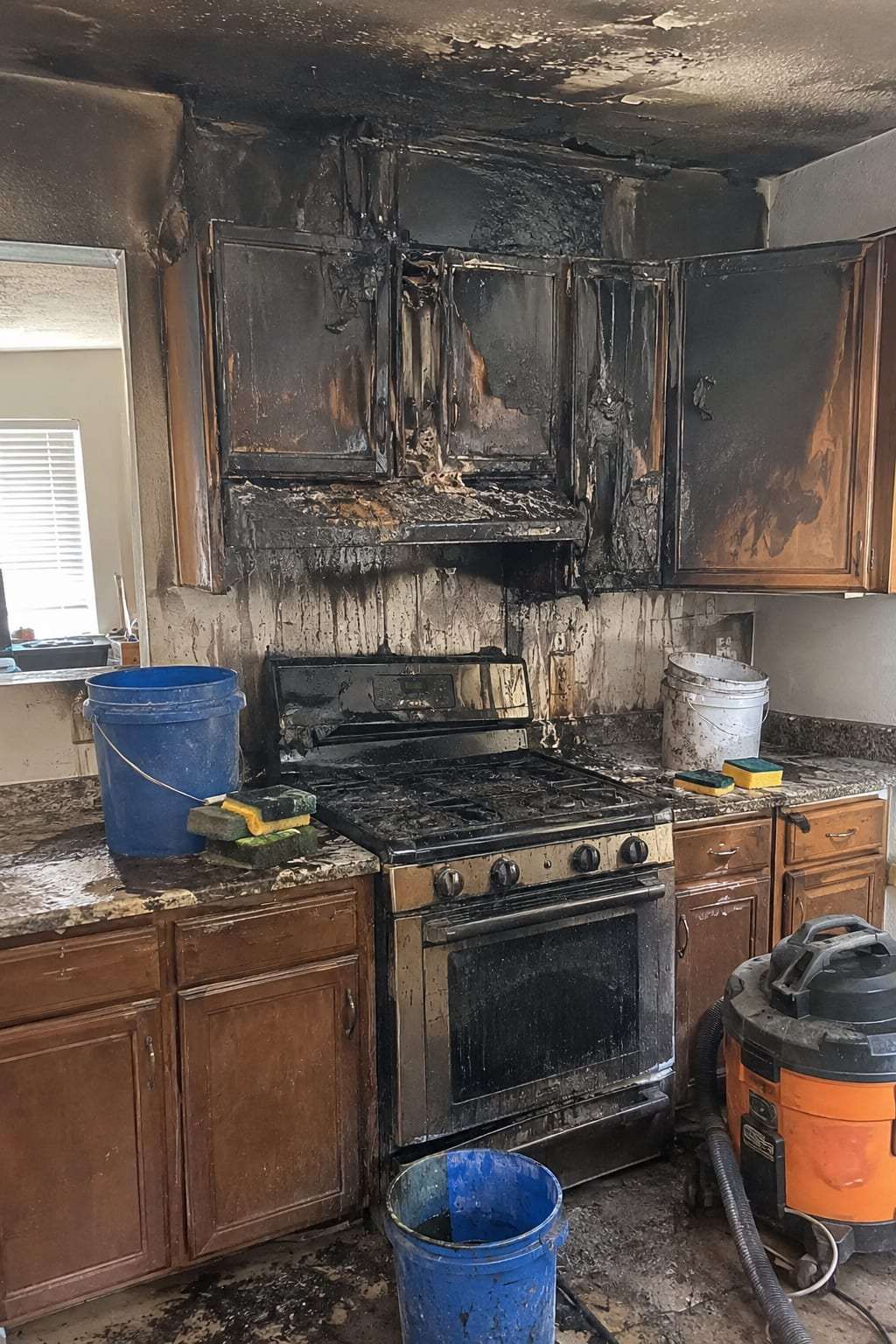
-
Clean and remove
Clean the plaster, wood and finishes that can be saved. Remove what's charred or saturated.
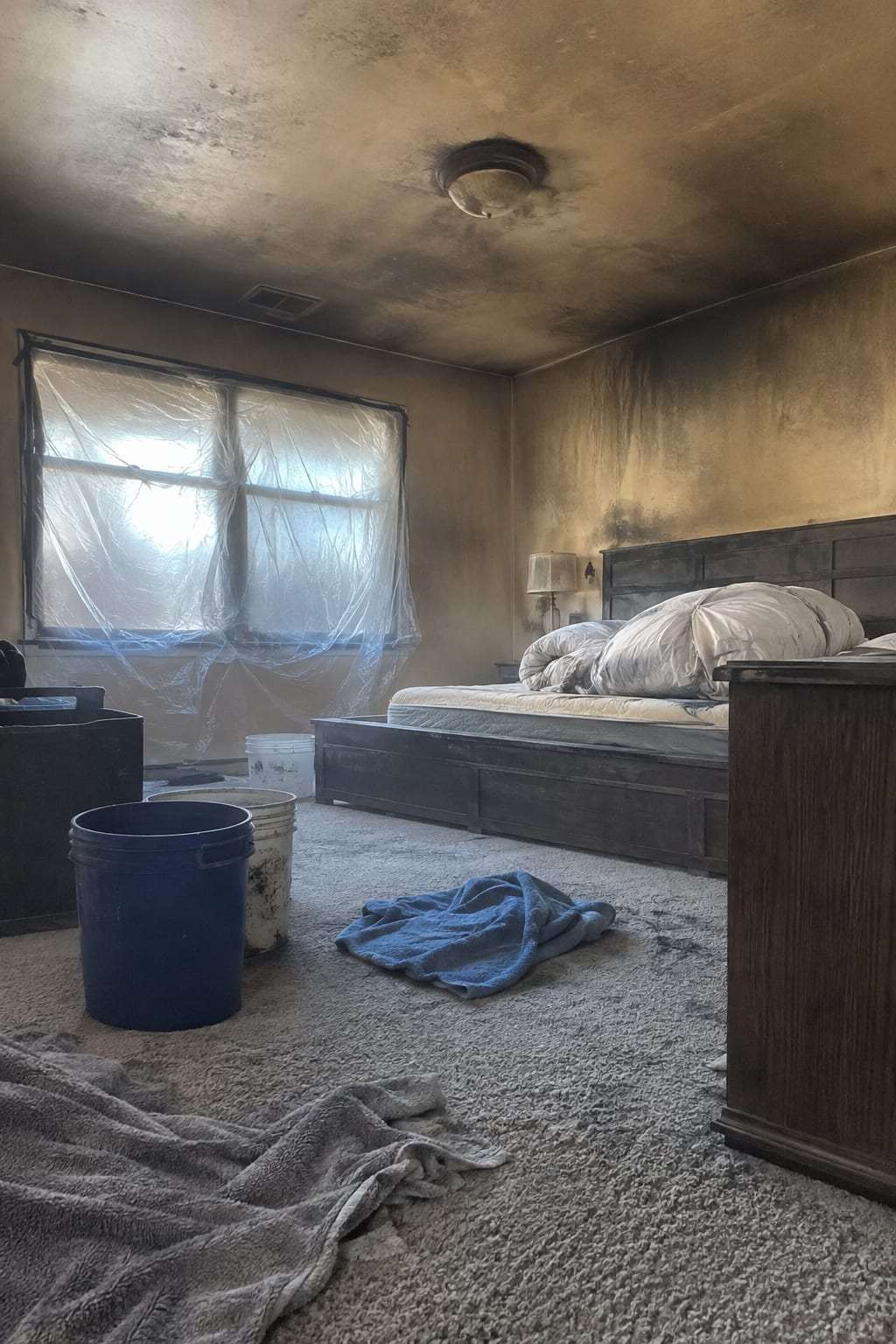
-
Deodorize
Treat odor where it hides: wall cavities, the attic and the ductwork. Seal surfaces before anyone paints.
-
Reconstruct
Rebuild to match the house that's there: its trim profiles, its plaster, its floors.
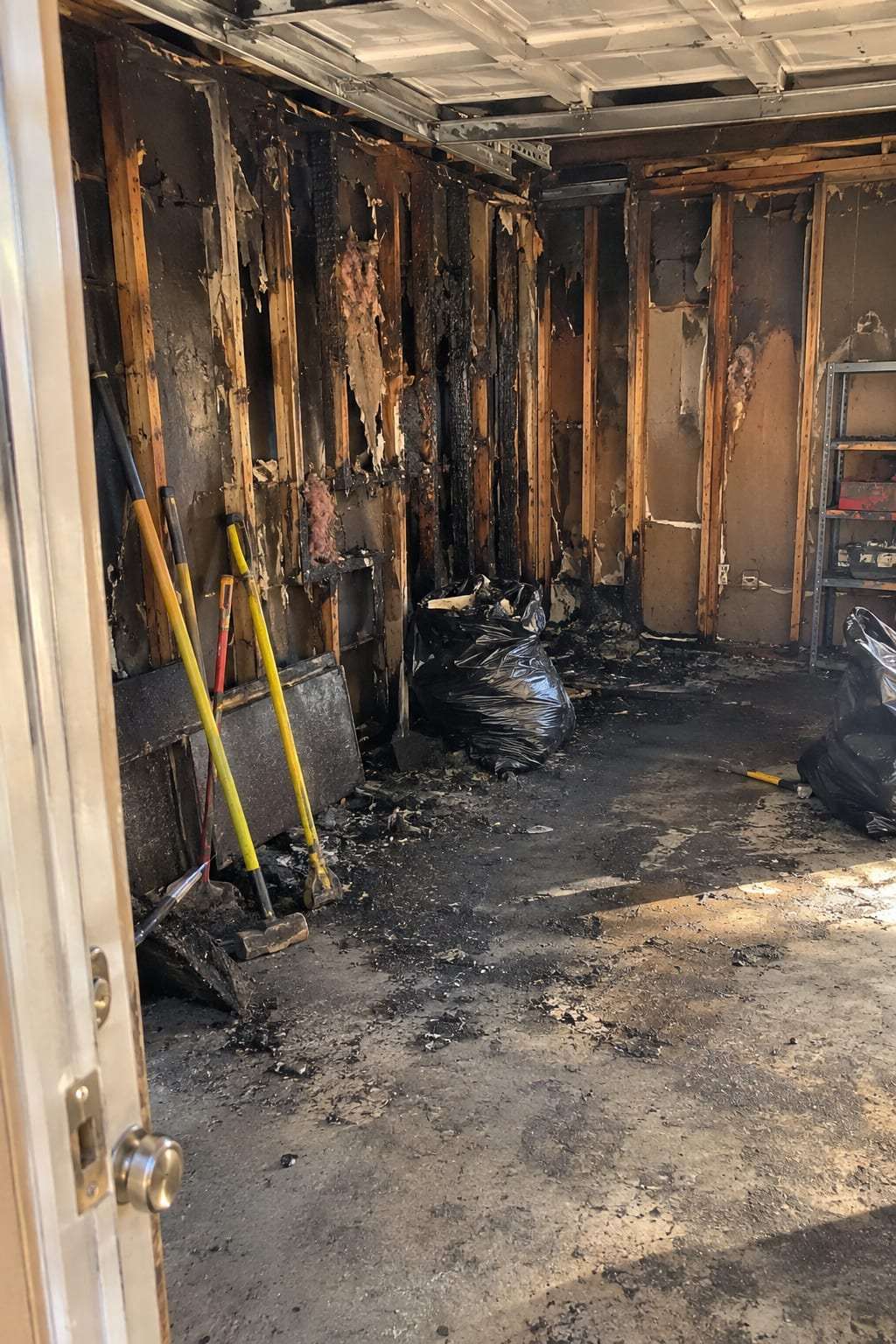
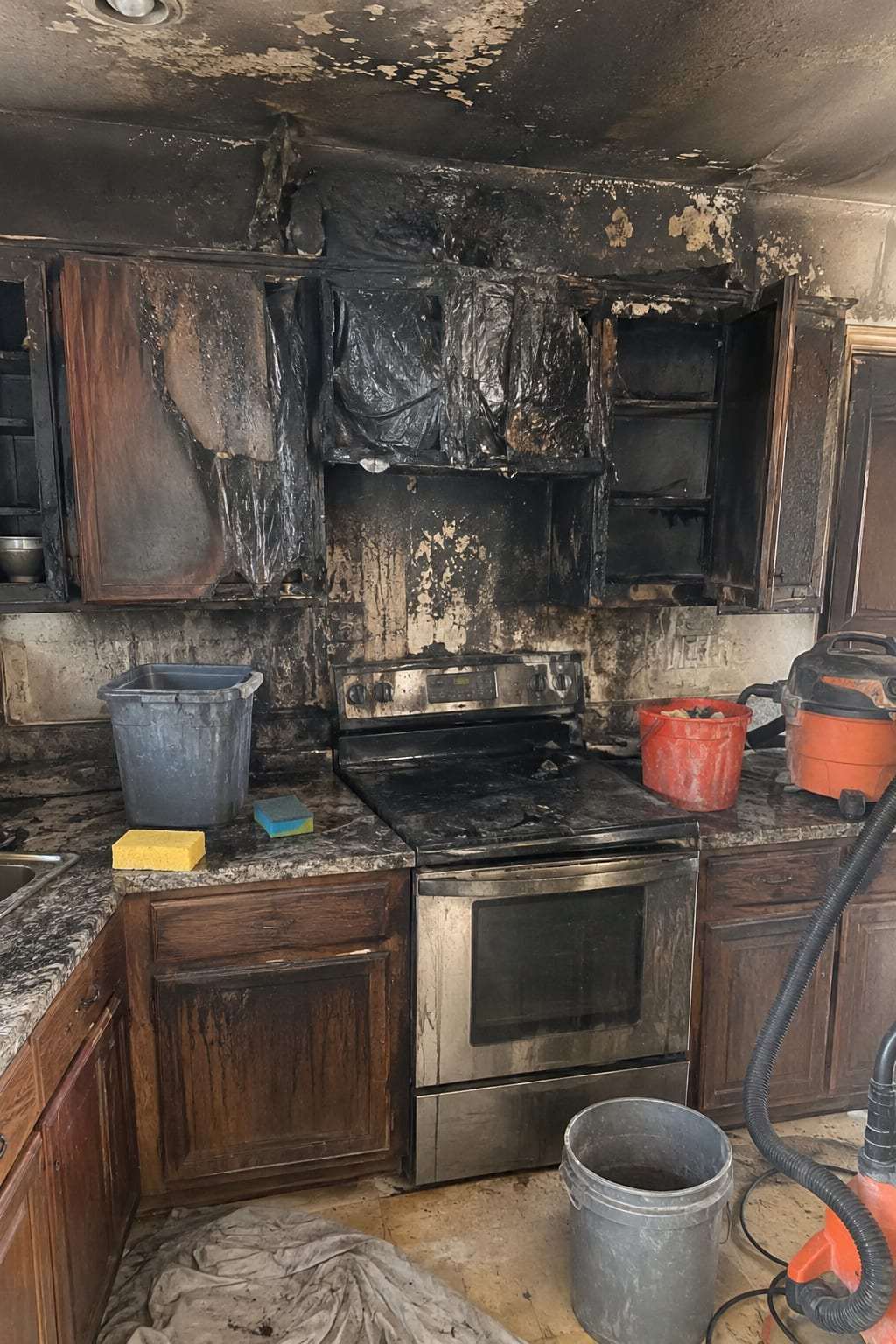
Photos show fire cleanup work in general. None of them documents a job by this site or in Park Hill.
Soot in the heating system
Some Park Hill houses were converted from coal or gravity heat to forced air, and the old oversized ducts stayed. They move a lot of air. During a fire, smoke pulled into the returns can end up in every room the system serves.
Leave the furnace and air conditioning off until someone has checked the system. Cleaning the ducts, registers and air handler belongs in the scope, along with a new filter. Skip it, and the first cold night blows soot across the rooms you just had cleaned.
Park Hill houses, and what that means for repairs
Park Hill runs from the brick Tudors, bungalows and Denver Squares along the southern parkways to the mid-century houses farther north. Plenty of owners have spent years keeping original woodwork and windows while updating kitchens and mechanicals.
After a fire, the work here is a trade between saving original material and making the house safe. Some restoration companies handle both the cleanup and the rebuild, which keeps every keep-or-replace decision with one crew. Ask whether yours does.
- Park Hill mixes houses from the 1900s through the 1960s. Ask whether a company has worked on houses the age of yours.
- In a designated historic district, or on an individually landmarked house, exterior changes may need review by Denver Landmark Preservation.
- Older houses can contain asbestos and lead paint. Testing before demolition protects your family and the crew.
- Many restoration companies that work in Park Hill are based elsewhere in the metro, so ask how long they take to get there.
Before you sign with anyone, ask two things: have they restored plaster-and-lath houses, and do they handle both the cleanup and the rebuild?
ZIP codes served: 80220 (Denver), 80207 (Denver), 80206 (Denver).
Also nearby: 80205, 80230, 80218, 80246, 80238, 80010, 80266, 80203, 80209, 80216, 80224, 80247, 80202, 80045.
Longer reading on older-house fire repairs
Guides and checklists on plaster, trim, old ductwork, permits and the insurance claim.
- Guides
Each guide takes one problem that turns up after a fire in a house built between the 1900s and the 1960s.
- Checklists
Print these, fill them in, or keep one open on your phone while you walk the damaged house.
- Neighborhoods
Park Hill and its neighbors went up over more than a century, so a fire in one neighborhood rarely looks like a fire in the next.
Frequently asked questions
- Can smoke-damaged plaster walls be saved?
- Often, yes. Sound plaster can usually be cleaned, sealed with an odor-blocking primer and repainted. Plaster that's cracked, loose or soaked from firefighting water may need repair or replacement.
- Will original hardwood floors survive a fire?
- Floors with surface soot or light heat damage can often be cleaned and refinished. Boards that are charred, cupped from water or stained deep into the grain may need replacing, ideally with matching wood.
- Why does the smell seem worse upstairs?
- Smoke rises and pools on upper floors and in the attic, and many older houses have open wall cavities that carry it between floors. Have the upper level and the attic inspected along with the room where the fire started.
- Does my older home need to be tested for asbestos before repairs?
- If the work will disturb materials that could contain asbestos, such as some plasters, flooring, pipe insulation or textured coatings, testing is recommended. For many projects, Colorado regulations require it.
- Can I live in the house during restoration?
- That depends on the damage. After a small fire you may be able to stay in the rooms it didn't reach. A large fire usually means temporary housing, and your policy may cover the extra living costs.
- Do I need a permit for fire repairs in Denver?
- Structural, electrical and many other repairs need permits from the City and County of Denver. Ask whoever does the work which parts of your project need them, and who pulls them.
- Can soot get into the heating system even if the fire was in one room?
- Yes. If the furnace or blower ran during or after the fire, it pulled smoke into the returns and pushed it out of every supply register. Older homes with large ducts or converted gravity systems move a lot of air. Have the ducts, registers, filter and air handler inspected and cleaned before the system runs again.
Start with the house, then the paperwork
Wait for the fire department to release the house. Call your insurer, photograph every room, and pick a restoration company you've checked before anyone starts demolition. If anything looks unsafe, call 911.
What a first call should cover
A reputable fire restoration company will ask where the fire started and how big it was, whether the house has been cleared for entry, and how old the house is. Ask them to walk you through securing the house, the assessment and the claim paperwork, and get the scope in writing.
Describe the fire damage
This form is not connected. This website is a draft preview: no business has been confirmed to receive requests, so the fields below are switched off and nothing can be sent. In an emergency, call 911.